
Systems Designed for Decades of Sun Exposure
Flat Roof Replacement in Bradenton for deteriorating membranes on commercial buildings and luxury residential additions
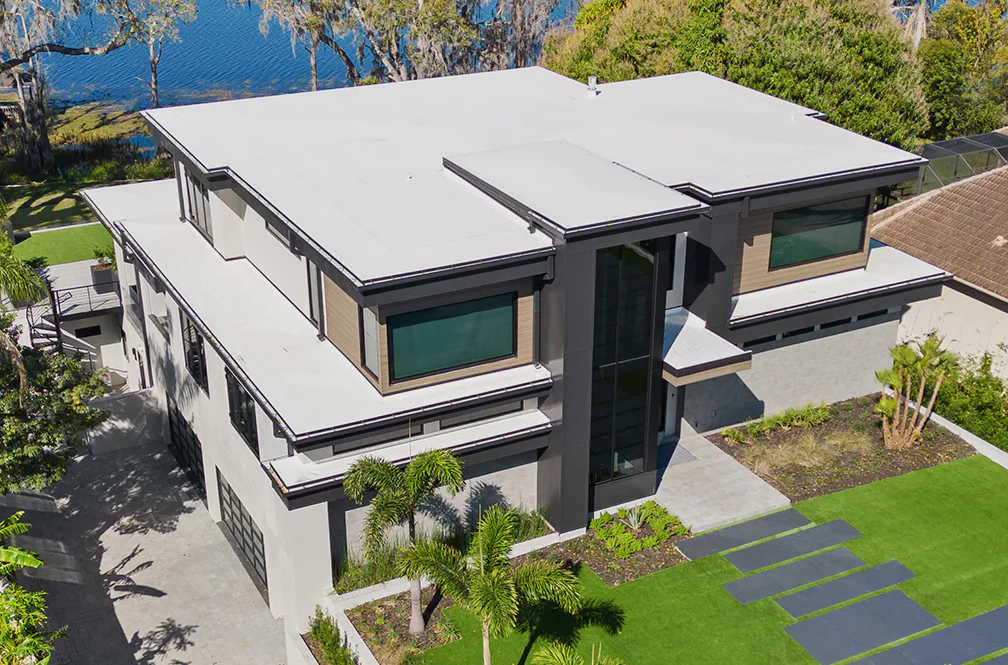
Flat roofs on commercial structures and residential lanais in Bradenton face constant UV exposure and ponding water that accelerates membrane breakdown, leading to leaks that damage interior finishes and compromise structural decking. TPO and PVC roofing systems provide heat-reflective surfaces that reduce cooling costs while resisting punctures and tears better than aging modified bitumen or built-up roofing. Silks Roofing performs complete tear-offs that expose the roof deck for inspection, installs insulation layers that improve energy efficiency, and secures single-ply membranes using heat-welded seams that create watertight barriers capable of withstanding Florida's intense summer heat and hurricane-force winds.
Replacement begins with removing all existing roofing materials down to the structural deck, evaluating deck integrity for rot or deflection, and addressing drainage issues that cause water to pool in low spots. TPO membranes are mechanically fastened or fully adhered depending on wind exposure and building height, and seams are welded using hot-air equipment that fuses the material into continuous sheets without relying on adhesives that degrade over time. PVC systems offer superior chemical resistance for roofs near saltwater or industrial areas, and both materials carry warranties ranging from 15 to 30 years when installed according to manufacturer specifications.
Request an on-site evaluation to assess your current flat roof condition and discuss membrane options suited to your building's use and exposure.
What Changes After System Installation Completes
Proper installation includes sloping modifications or tapered insulation that directs water toward drains and scuppers, eliminating ponding that shortens membrane lifespan. Modified bitumen systems use torch-applied or cold-adhesive methods depending on fire code restrictions, and they perform well on low-slope residential applications where reflective coatings further reduce heat absorption.
After installation, you notice that interior temperatures drop because reflective membranes deflect solar radiation, water drains completely within 48 hours of rainfall rather than pooling indefinitely, and ceiling stains no longer expand during storm events. The roof surface appears uniform without wrinkles or bubbles, seams lie flat with consistent weld beads visible along joints, and flashing around HVAC units and parapet walls integrates seamlessly with the membrane.
Warranties require annual inspections to document membrane condition and verify that drains remain clear, and those inspections often identify minor issues like loose fasteners or small punctures before they develop into leaks. Full system replacements on commercial buildings typically happen during dry months to avoid weather delays, and phased installations allow portions of the building to remain operational during construction.
Answers to Frequent Service Questions
Building owners considering flat roof replacement usually need clarity on material performance, installation disruption, and long-term maintenance requirements.
What distinguishes TPO from PVC membrane systems?
TPO uses a thermoplastic polyolefin compound that offers good heat reflection at lower cost, while PVC contains plasticizers that provide greater flexibility and chemical resistance, making it preferable for roofs exposed to saltwater spray or industrial pollutants.
How does heat welding create stronger seams than adhesive?
Heat welding melts the membrane material at seam edges and fuses them into a single piece as they cool, which eliminates the bond degradation that occurs with adhesives exposed to UV radiation and temperature cycling.
When should drainage modifications happen during replacement?
Drainage corrections are made after tear-off exposes the deck and before new insulation goes down, allowing tapered insulation boards to be installed that create positive slope toward drains and eliminate low spots where water collects.
Why do flat roofs on Bradenton lanais and additions fail prematurely?
Residential additions often receive less rigorous drainage design than main structures, and inadequate slope combined with Florida's intense afternoon thunderstorms leads to ponding that breaks down membranes and allows water to migrate beneath the roofing system.
How long does a commercial flat roof replacement take?
Projects typically require one to three weeks depending on building size and weather, with tear-off and deck preparation occupying the first phase and membrane installation progressing in sections to maintain weather protection throughout the process.
Silks Roofing specializes in TPO and PVC installations for commercial properties and luxury residential flat roofs in Bradenton, with full tear-off services that address underlying deck and drainage issues. Arrange a consultation to review your building's specific requirements and receive a detailed proposal covering membrane type, insulation upgrades, and warranty terms.